
Are We There Yet?
Bridge of Lament fosters meaningful dialogue and understanding, honoring the complexity of our shared history as we navigate our nation's 250th anniversary milestone.

In 2019, the New York Times published a long-form journalistic history of America called the 1619 Project, named after the year that “20 and odd” enslaved Africans arrived at Point Comfort, a coastal port at the tip of the Virginia peninsula, and were sold to the governor of Virginia.
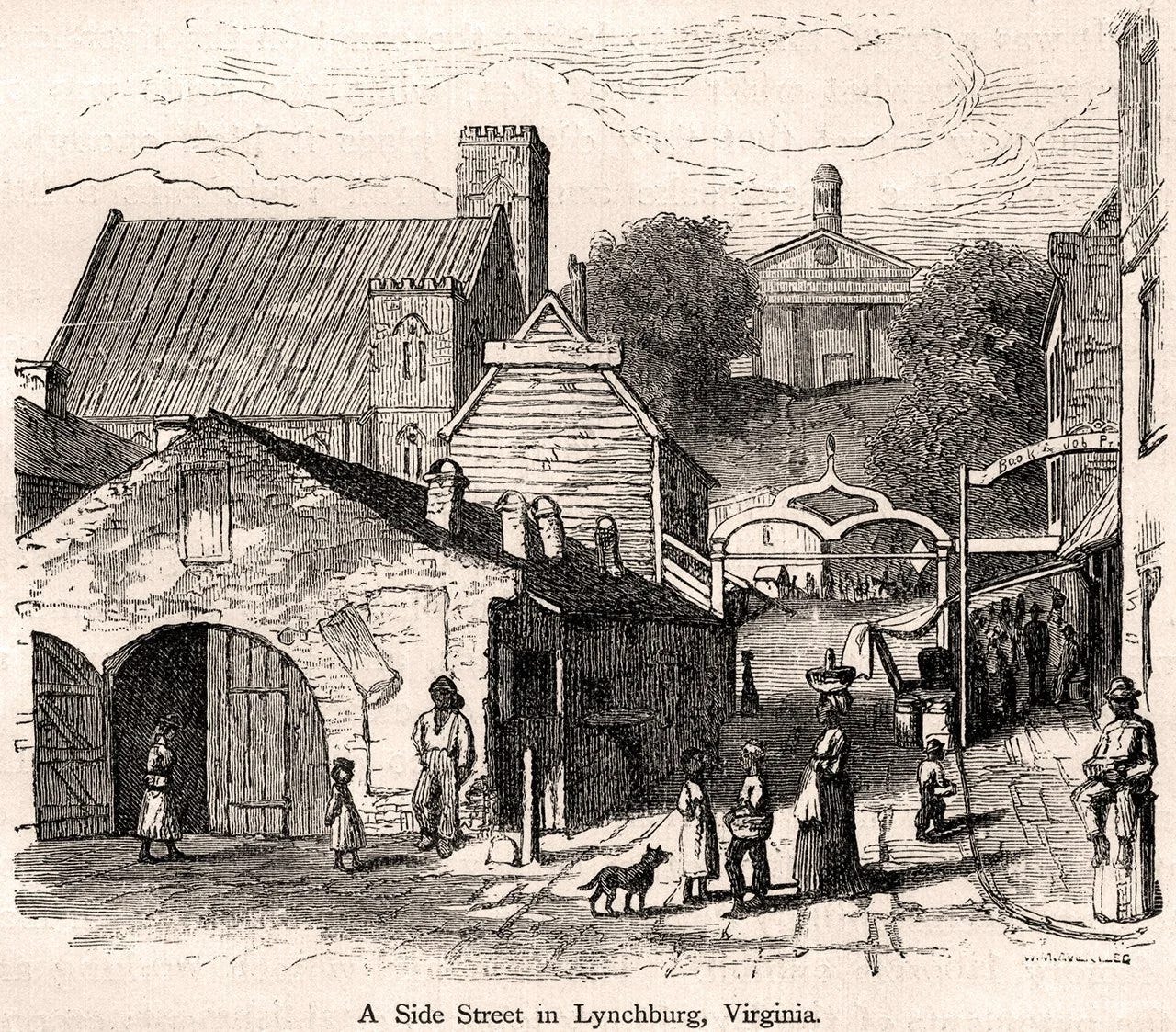
Lynchburg, less than a four-hour drive from what is now called Old Point Comfort, did not exist at that time. The land was occupied by various indigenous tribes until 1721, when the Haudenosaunee Confederacy (known to Europeans as the Iroquois Five Nations) relinquished control of the land on which Lynchburg now stands to the Colony of Virginia. However, 1619 was the beginning of what would eventually become chattel slavery in America, and Lynchburg was drawn into that narrative. By the 19th century, 40-50% of Lynchburg’s population were enslaved Africans and their descendants. The Hill City was the largest slave market west of Richmond and, according to the Director of the Lynchburg Museum System, Ted Delaney, “per capita, had the most enslaved people of any large city in Virginia before the Civil War.”1
“per capita, [Lynchburg] had the most enslaved people of any large city in Virginia before the Civil War.”
The 1619 Project was controversial because it sought to recast the American origin story around slavery, declaring it foundational to the creation of the United States of America and a legacy that still defines it today. Therefore, according to the project’s lead author, Nikole Hannah-Jones, America’s “true birth date” is August 20, 1619, when the commander of the White Lion landed at Point Comfort with his human cargo and traded them for supplies. While its veracity and conclusions have been the subject of much debate, The 1619 Project provided an invaluable service to students of American history by taking an unflinching look at slavery and its aftermath, and how its effects remain with us to the present day.
Nevertheless, the subject of slavery remains contentious for many within the American public, often provoking discomfort or resistance. The 1619 Project in particular sparked an immediate and widespread reaction—a response that one of our writers aptly captured:
“One of the attempts to counter the narrative of the 1619 Project was the 1776 Report, written by an advisory committee established by then-President Donald Trump in September 2020 to present a story that glorifies the history and legacy of the United States. The emphasis on 1776, the year America declared its independence from Great Britain, made it obvious that the 1619 Project was its primary target. The resulting report, released two days before President Trump left office, was just as controversial as its antagonist, and President Biden disbanded the commission soon after taking office.”2
The controversy around the 1776 Project was its sanitized, mostly uncritical, and excessively praiseworthy telling of the American story, and the presumption that America’s aspirations as defined in its founding documents, the Declaration of Independence, the Constitution of the United States, and the Bill of Rights, have been largely realized, and all the sins of the past forgiven and forgotten. The outbreak of racial tension in 2020 after the murder of George Floyd by a Minneapolis police officer, and the continuing strife between African-Americans and the nation they call home, give the lie to those presumptions.
As the United States prepares to celebrate its Semiquincentennial, the 250th anniversary of the signing of the Declaration of Independence, we are seeing an unprecedented whitewashing of American history by an administration determined to force the mythology of the 1776 Project into the public consciousness. Calling any examination of America’s past misdeeds “a distorted narrative driven by ideology rather than truth,”3 the current administration is stripping away references to Black history from museums, national parks, cemeteries, and other public places, calling it “restoring truth and sanity to American history.” They have recruited conservative commentators to create new materials and social media glorifying America and glossing over its horrors, creating a version of American history that is exclusive, propagandistic, and unwilling to face the past with honesty and humility.
There are those who want to declare victory and not look back, nor examine the consequences of past harm that haunt us today. There are others who not only challenge America’s image of itself as an exceptional nation but also believe it to be irredeemably flawed, unable or unwilling to reconcile its past with the present. Our approach is different than both of these.
Now in its fourth year, Bridge of Lament has worked alongside various organizations4 and community members to tell the story of Lynchburg’s history of slavery, white supremacy, and the struggle to overcome those ideologies. By reconstructing these stories, we have not only shed light on the city’s past but have also demonstrated how those historical events continue to shape the community today. On the 250th anniversary of America’s independence from Great Britain, as we consider the preamble to the Declaration of Independence, the question is: “Are we there yet?” It is a clear and concise question, directly asking whether America has lived up to the ideals set forth in its founding document.
We hold these truths to be self-evident, that all men are created equal, that they are endowed by their Creator with certain unalienable Rights, that among these are Life, Liberty and the pursuit of Happiness.
Are we there yet?
This is a question that demands careful consideration for the Lynchburg area, especially in light of our significant history with human enslavement. But this year, as our nation marks the 250th anniversary of American independence, our focus with Bridge of Lament extends beyond local reflection. We are also committed to engaging at both regional and national levels, placing our community’s story within the larger tapestry of competing historical narratives. While it may be tempting to align ourselves with one side of the ongoing historical debate and defend it vigorously, our goal remains different. We are resolved to approach the question, “Are we there yet?” with humility and an unwavering commitment to truth, regardless of how uncomfortable that truth may be. By doing so, we hope to foster meaningful dialogue and understanding, honoring the complexity of our shared history as we navigate this significant milestone together.
The Bridge of Lament Committee
Ron Miller, Jeremiah Forshey, Beatrice Hunter, Kenton Martin
About Bridge of Lament: https://bridgeoflament.substack.com/about
We invite writers, editors, and pre-readers from Lynchburg, Virginia, and surrounding areas to help us answer the question, ‘Are we there yet?’
Reach us at bridgeoflament@gmail.com for more information.
WDBJ7 report on Black History Month, February 2026. https://www.wdbj7.com/2026/02/26/watch-wdbj7-commemorates-black-history-month/
“1619, 1776, or A.D. 33?” Ron’s Reflections, May 24, 2023. https://ronsreflections.substack.com/p/1619-1776-or-ad-33
Executive Order 14253, https://www.whitehouse.gov/presidential-actions/2025/03/restoring-truth-and-sanity-to-american-history/
Two important organizations that chronical slavery in Lynchburg:
In late 2020, Mike Palombo, then an assistant pastor at Rivermont Evangelical Presbyterian Church, led a group of REPC members on a 'tour of lament' to sites in Lynchburg associated with our city's history of slavery. The point was to inform us about our history and to enter into godly lament for that past and how it continues to affect us today. I am grateful to Ron Miller for posting about this group and for your efforts to keep us awake to the continuing struggle to "get there," because we are not there yet.
I really appreciate the direction you are taking for this year's Bridge Crossing and the work you're putting in. Thank you for keeping the important questions and histories in front of us.